Rum Village had a habit of dressing up sin and calling it tradition. The GridIron didn’t bother with the lie. It wore its helmets and halos right out in the open.
Two floors of chrome rails bent like goalposts over a sea of blue and gold—Notre Dame pennants stacked beside Colts banners, rugby shirts on mannequins with grass stains left in on purpose. The dance floor was a painted field: yard numbers, hash marks, a midfield horse rearing in neon. A scrum circle gleamed in the back like a second ring. The sanctioned fights lived there—on camera, on contract, and under Nike’s fine-print mercy.
Kaitlyn stepped through the entrance ramp with Apollo and Aira flanking her. She rolled her towel once, twice, popped her gum, and kept it tucked in her cheek as the air swelled with bass and breath. The crowd recognized her—some chanted “Sham-rock! Sham-rock!”—but she didn’t tip them her chin. Her eyes were up, always up. Catwalks and skyboxes latticed the ceiling. Help from above. If it was coming, it would come from there.
Her gaze dropped, then sharpened.
There he was.
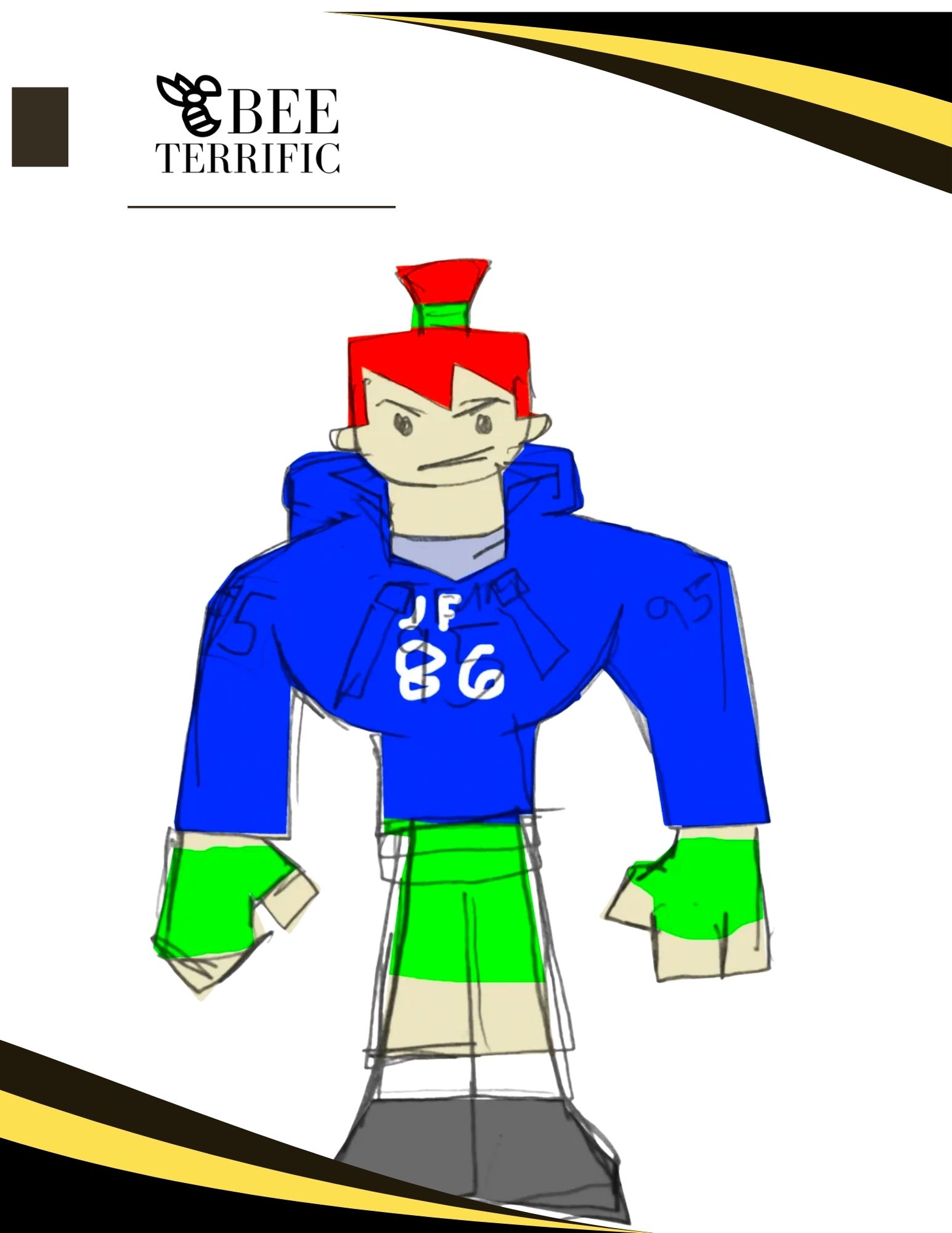
Flint strutted out of the tunnel opposite, big as he’d always been but cut sharper than memory: a sleeveless rugby jersey shot through with blue stripes, shoulder pads trimmed into something more like theater armor than padding. His cleats looked like they’d been quarried, each stud a little monolith. He grinned when he saw her. It was that old grin—the one that promised a dare and a hug, maybe in that order.
He stopped at midfield. The crowd roared like the stadium they were trying to be.
“Welcome to the Scrummery,” Flint bellowed, spreading his arms. “Where rules are a handshake and the earth can still feel you when you stomp!”
Kaitlyn didn’t smile. “We’re not here for your patter.”
“Sure you are.” He spread his hands wider, soaking in adoration. Gloryhound to the bone. “It’s what you missed most.”
Apollo leaned in. “He’s loving this.”
“No kidding,” Kaitlyn said, gum popping.
Aira’s voice stayed low. “He’ll talk when you make him. He’s the type who only hears impact.”
Kaitlyn’s jaw ticked. “He’s my brother.”
“And brothers are the ones who think they don’t have to answer the easy questions.” Aira folded her arms. “Ask the hard ones.”
Kaitlyn tossed her towel to Apollo. He nearly fumbled it; she didn’t look back to see whether he caught. She hopped the rail and dropped into the scrum circle. The turf here wasn’t fake; packed earth lay under a thin lid of field paint, tamped so hard the stomp echoed like a drum.
Flint bounded down to meet her. The crowd packed tight around the circle, phones up. Security pretended to keep them at distance; Nike liked these angles.
“Three minutes ‘fore we start, Kay.” Flint winked. “You want an autograph for your little friends?”
“Cut the act.” Kaitlyn’s voice stayed flat. “Where’s Dr. Ray?”
A small muscle jumped along Flint’s jaw, almost too quick to catch. Almost.
“Doc’s a busy man.” He smoothed it with a chuckle. “You know how he gets when he’s making rounds.”
“He texted Aira last from here. He said you were first on his list.” Kaitlyn stepped closer until they were belly-to-belly, shorter by hair but heavier in will. “Then he vanished. You going to tell me you didn’t see him?”
Flint’s grin returned, wider, showier, faker. “Didn’t say that.”
Kaitlyn’s nails bit her palms. “So you did.”
“I said I didn’t say that. Which is different. And if I did see him, I might have promised not to say anything to his nosiest—”
Her gum clicked. “Finish that sentence.”
“—favorite daughter.”
It landed like a slap. Not because of the word. Because of his eyes when he said it—off to the side, up to the skyboxes, like someone had tugged a string tied to his pupil.
Kaitlyn followed the glance. Third box on the right, glass darkened. A shape was a shadow behind it, perched. Watching.
Nike loved her boxes.
Kaitlyn’s spine went cold, then hot, then gravel. “You’re being watched.”
“We’re always being watched, Kay.” He lifted his forearms like a host who wants applause. “That’s the sport.”
“This isn’t sport.” She stepped into his chest and spoke for him alone. “Dr. Ray is missing. And you are going to tell me what you know.”
Flint’s smile tried to hold. It cracked. “Not here.”
“Here is where you are,” Kaitlyn said, “and here is where you listen.”
He set his jaw and the performer died; the scrapper stepped in. “You want to pull big sister on me, do it. But you want truth?” He thumped his sternum. “Make me feel it.”
The MC at the rail didn’t need a cue. “LADIES AND GENTLEMEN, A SANCTIONED SCRUM!” he howled. “FIVE MINUTE ROUND! EARTH VS EARTH! IF THE GROUND BREAKS—WE CHEER!”
The circle sealed. The field lights spun. Apollo cursed under his breath. Aira folded one ankle behind the other, entirely too calm.
Kaitlyn rolled her shoulders, the motion loosening something coiled beneath the skin. The talisman warm in the hollow under her ribs thrummed, subtle as a heart murmur.
Flint brought his knuckles together like a prayer and then snapped them wide. Dust hissed upward in two straight lines, a rugby set-piece drawn into the floor.
“SCRUM ON!” the MC sang.
Flint charged first—of course he did—cleats punching little craters, shoulders low like a season highlight. Kaitlyn pivoted, heel carving a crescent. The earth skated under her command, a slip of packed soil turning slick as riverbed. Flint’s lead foot skidded; she snagged his wrist, used his own weight, and slung him past. He skated on his own momentum, regained center with a stomp that stiffened the turf again.
“Still the same tricks, Kay!” He grinned, breath quick. “Topsoil ballet.”
“You still forget to look down.” She collapsed the ground just beyond his next step, an ankle-deep sink that made his knee knock. Before he could right himself she was on him, shoulders inside his shoulders, hips under. Rushdown. Pop-pop-pop: three body shots, each one using the earth to return the force, each one catching his ribs. He absorbed them like a wall and laughed, but she felt the tremor run through him.
“Got more?”
“Always.”
He went for the bear hug; she ducked and spun, planted her palm, and threw a wheel kick that would have put him on his back if he hadn’t turned and caught her shin. He lifted, using her own power to spin her heel-over-head—showman—then deposited her with just enough force to look mean without ending the round.
Boos. Cheers. Phones flashing.
Kaitlyn bounced up and popped her gum. “You’re pulling.”
“Maybe I like my sister’s face.”
“You like your audience more.”
“Guilty.”
They circled. Dust kept finding them. The circle’s edge indicators pulsed with thin blue light, pure club tech dressed to look like stadium gear.
Kaitlyn jabbed. Flint shrugged. They traded grips at collar and elbow, an old dance of leverage and low centers, each building little ridges under the other’s feet to ruin balance. To the crowd it looked like stalemate. To Kaitlyn it felt like a seesaw—every time she pushed, he gave ground then bounced harder back, trying to draw her cadence. To make her predictable. To set something.
She saw it: the tiny furrows he’d been planting in a shallow arc, like a smile carved around the back of the circle. One more charge and she’d be inside it.
“Don’t,” Aira called, soft but edged. “He’s funneling you.”
Kaitlyn smiled without looking. Mentor, always reading angles.
So instead of charging, she let him roar in and caught him with the ground itself. The ridges he’d shaped—she inverted them with a flick of thought, turned the ramp into a trough. He stumbled into his own trap. She snapped her knee up under his chin. His head snapped back; he staggered.
Truth now.
She closed, forehead pressed to his cheek. “Where is he?”
Flint chuckled…and then the laugh broke into a hiss. “You ever think maybe what you don’t know is the only thing keeping you alive?”
“Who told you to say that?”
Silence. Then, barely moving his lips: “She’s upstairs.”
The glass of the box caught a strobe. For a breath it mirrored the fight—two figures wrestling in miniature. Then it went black again, a dark pupil over a bright ring.
Kaitlyn’s anger found a vein and ran hot. “You were the last to see him.”
“Wasn’t by choice.”
“You chose to keep it from me.”
He yanked free and blasted her with a double palm strike. The earth under her feet turned slick again—his trick, improved. She slid back three feet, cleats dragging stripes. He clapped once; a line of soil bulged behind her and caught her heels. She toppled to a seated crouch and he pounced, arms around, trying to cinch a cradle and pin. Grappler. He always loved victories that looked like hugs.
Kaitlyn bucked. The ground stiffened under her sacrum; she surged up, forehead crashing into his sternum. He grunted. She shucked his arms and spun behind, hands hunting for the choke that would end his chatter.
“Kay,” he rasped, eyes wet with sweat and something else. “They took him because of us.”
The hands stopped at his collarbones.
He saw the opening and could have thrown her over his shoulder. He didn’t. He put his big paw over her small one at his neck and held it there, a strange clasp.
“They took him because of what she did to Dad,” Flint said, a rush against her ear. “You want the truth? You already know it. You just keep it in your jaw so you don’t scream.”
A memory flashed like a broken light: a living room that smelled like old pennies; their father’s hand rough with wood and oil; the door splintering and the sky lights going to ash; Nike’s eyes a thin coin of green in the smoke.
Kaitlyn’s breath burned. “Say it,” she demanded.
“Dad died because of her,” Flint said. “Doc covered for us so we wouldn’t burn the world down over it. Now she wants the last leash off. She’s got him somewhere that moves—he’s not in one place long.” He swallowed. “I couldn’t tell you in a text. I couldn’t tell you anywhere with mics. And she has mics everywhere.”
“You don’t trust me to keep my anger quiet.”
His eyes glistened. “I trust you to use it.”
She almost laughed—ugly, broken. “You sound like you’re joining.”
The referee in the cheap suit—really just a bouncer with a whistle—hovered at the edge of the circle. “Thirty seconds!” he barked. The crowd redoubled its noise, as if volume could buy them more fight.
“Then say it,” Kaitlyn ordered again, but sharper. “Say the part you’re still hiding.”
He glanced up. The box stared down. And Flint did something Kaitlyn hadn’t seen him do since they were kids sneaking into the rec center pool at midnight.
He shut his eyes and prayed.
Not with words she could hear—but with the way his chest lifted, the way his mouth went soft, the way the ground under them listened.
It wasn’t a prayer to a god. It was a prayer to momentum.
He opened his eyes, and the performance was gone again. He was just her brother, finally, in the body of a hero he’d built so nobody could tell he was still a scared kid.
“We make our own help from above,” he said. “Cameras or not.”
He broke the clinch and shoved her back—hard enough to draw a gasp from the crowd. He followed with a spear that would have cut her in half if she stayed flat. She didn’t. She vaulted high, higher than physics should allow, knees tucked to chest. The talisman’s hum climbed her ribs like a drumroll. When she came down her feet hit his shoulders and drove. The earth beneath him gave way an inch—just enough—and Flint slammed to his back. She hooked a leg, pinned his ankle with a stone stud, and laid her forearm across his throat.
He could have rolled. He didn’t.
The whistle shrieked. The MC howled her name. The lights strobed. The circle erupted like a volcano trying to be a parade.
Kaitlyn didn’t stand. She pressed down until his eyes were only for her. “Choose.”
Flint’s throat worked under her forearm. He smiled, small and true this time. “Twins,” he breathed. “Dad didn’t teach us to run.”
She eased off and hauled him up. The crowd reached in to touch, bless, steal a moment in the footage. The box stayed black.
Aira slid under the rope. Apollo stumbled in after her, towel draped around his neck like a scarf of surrender.
“Well?” Apollo asked, too loud.
Kaitlyn turned her mouth so only Flint heard. “You say the place moves. Convoys or trains?”
“Neither. Think private boxes with wheels. Think one city one day, another the next. She’s built a mobile nest.” He spat a fleck of blood into the dirt and ground it with his heel. “He was on one of them when I saw him. She called it a caravan like she was telling a fairy tale.”
Aira’s eyes sharpened. “Routes?”
“Notre Dame days,” he said. “Big game nights. She likes the cover. The city sings and no one hears the humming underneath.”
Kaitlyn stared up again at the glass. The shadow had moved. Or maybe it had never been there. Her knuckles ached. She tucked the ache under her tongue like gum.
“Then we cut the song in half,” she said.
Flint huffed a laugh. “Now you’re talking.”
“Hold on,” Apollo said. “Does that mean—”
“It means,” Kaitlyn said, turning to face the crowd because she had to use what Flint loved, “the GridIron’s favorite son just lost to his big sister and decided he likes winning more than applause.”
She reached for Flint’s wrist and slung it up with hers, a twin victory pose that drew a wall of noise so dense it felt like pressure.
Flint leaned in. “She’ll know the second we leave together.”
“She already knows.” Kaitlyn tipped her chin at the ceiling. The catwalks trembled with bodies moving to the edge. The cameras had never blinked.
Aira slid between them, unbothered by the closeness. “Then we make her think this is a storyline.” She smiled only with her eyes. “A family feud gone longer. Nike likes melodrama.”
“Same plan I had,” Flint said. “Just with less vocabulary.”
“Then hit your mark,” Aira said. “Kay, you storm out with the win, shout about how you’re coming for information, make it clear you don’t trust him. Flint, you stay and beat three bouncers senseless as penance. Then you slip out the south loading dock and meet us at the scrapyard on Sample Street. The magnets mess with the ears in the sky.”
“Scrapyard?” Apollo perked up, almost happy. “Do we get to use the crane?”
Kaitlyn side-eyed him. “If you hush.”
He hushed, grinning.
Flint squeezed Kaitlyn’s shoulder, sudden and strong. “You sure you’re good, Kay?”
Good. A word with too many edges. She nodded. “We’re twins,” she said. It stood in for everything else: the living room and the smell of pennies; the man on the floor; the girl in the smoke; the years after where you learned to smile like it didn’t hurt.
She remembered what the B-Story demanded, even if she’d never call it that—new bonds, new ways to tell the truth of what the world had become. Aira had nudged her to hear instead of hit. Apollo, for all his noise, had stood between monsters twice now and called them friends. And Flint—Flint had finally decided applause was colder than family.
Kaitlyn snatched the mic that descended from nowhere and spoke into the GridIron’s lungs. “Rum Village,” she said, and the words rolled like thunder because the ground loved her voice, “you came to see a fight.”
They roared on cue.
“You got one. But this isn’t over.” She pointed—not at Flint, but it read that way for the cameras. In truth she pointed at the box. “There’s someone upstairs who thinks this ring is a leash. Who thinks we can be told when to speak and how to kneel. Not tonight.”
The crowd whistled, hooted, threw caps.
“I’m coming for the truth,” Kaitlyn said. “And if you’re hiding it—” the gum popped, sharp as a nail “—I’ll pull every board out of your floor until the sky falls on your head.”
She dropped the mic. It bounced once, thumped twice. She took her towel from Apollo, slung it across her shoulders, and swung a leg over the rail.
Behind her, Flint squared up to the first bouncer with a grin like a sunrise.
Aira slipped into step with Kaitlyn and Apollo as they pushed through the bodies to the tunnel. “He’ll make plenty of noise,” she murmured. “We should move while everyone’s filming him.”
“Scrapyard,” Apollo echoed, a little bounce in his step returning. “Man, I love magnets.”
They burst into the service corridor, pale lights buzzing, concrete sweating. The music was a memory back here. When they hit the exterior door, winter’s bite flashed them with a wet slap of lake wind. Kaitlyn gulped it down, like it might cool the edges of her temper. It didn’t, but the cold made her feel awake enough to be patient.
They jogged along the alley, steam spiraling from their mouths. Aira kept pace like she was carved from the same velocity. Apollo hummed, uncontainable. Somewhere behind them, a cheer rose, a crash followed, and a slow chant of “Flint! Flint! Flint!” trailed into the night.
“Were you happy, in there?” Aira asked, not quite looking at her.
Kaitlyn frowned. “About what?”
“You walked in angry.” Aira’s voice warmed. “You’re leaving with your brother.”
Kaitlyn pictured Flint’s eyes when he’d finally told the truth. The way he’d closed them first. The way he’d called them twins like a password. She allowed the corner of her mouth to lift one degree.
“Happy enough,” she said.
“Good,” Aira replied. “Because happy fighters don’t flinch. And you’re going to need that when we pull the caravan off its tracks.”
Kaitlyn popped her last gum bubble into the wind and watched it sail like a defiant comet toward the scrapyard lights blinking two blocks away. Help from above? Maybe. Or maybe help was two hands, one towel, and a brother who finally remembered whose daughter he was.
Either way, the ground was listening. And tonight, it was on her side.